- (731) 423-8200
- 1877-284-3135


- Cardiological Procedures
Percutaneous Coronary Angioplasty
Percutaneous coronary angioplasty is a procedure to open blocked heart arteries using a balloon and stent.




Invasive Procedure
Percutaneous Coronary Angioplasty
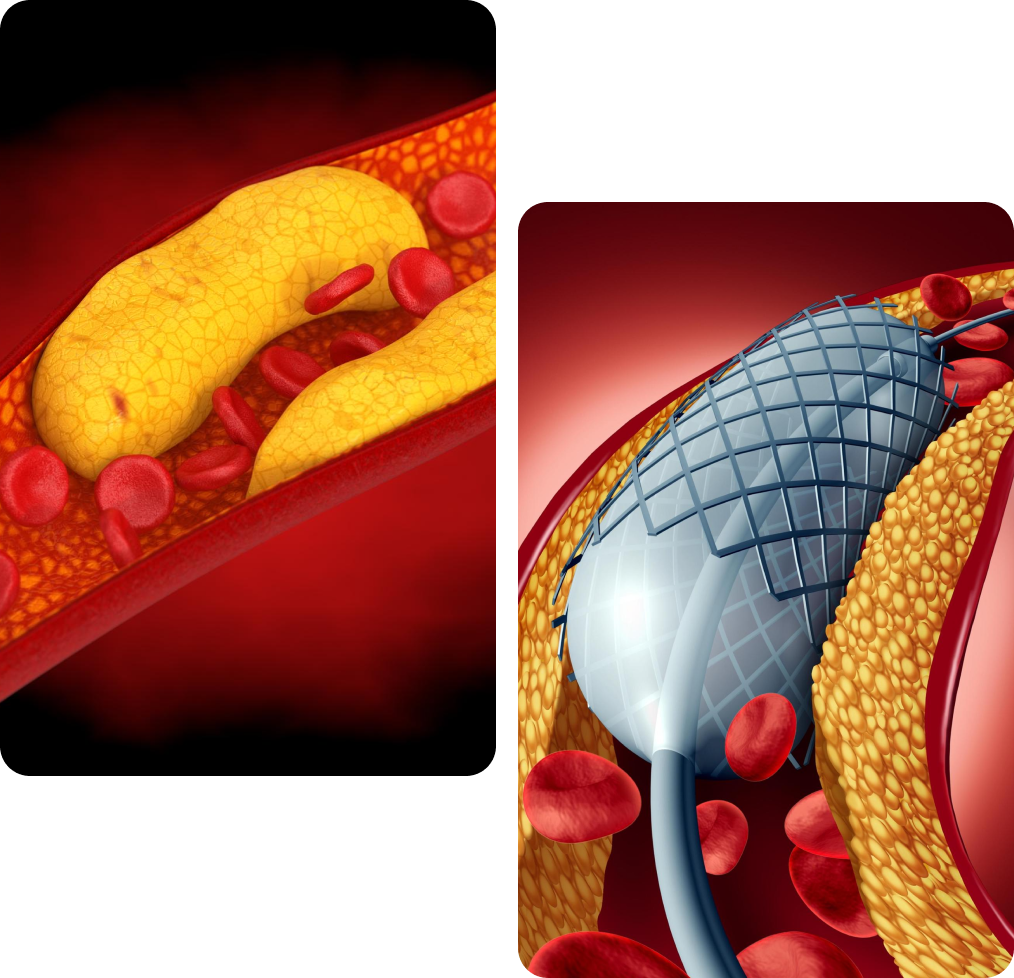
Arteries, blood vessels that carry oxygen-rich blood to all the parts of the body, are normally flexible and smooth on the inner side, but deposits of cholesterol, calcium, and fibrous tissue (plaque) can build up on the inner walls of the arteries, making them hard, stiff and narrow. This process of thickening and hardening of the arteries is called atherosclerosis. Atherosclerosis can reduce or completely stop the flow of blood through them, causing damage and pain to the part of the body that the arteries supply.
Angioplasty is the surgical procedure that is performed to widen these blocked or narrowed arteries. During angioplasty, your surgeon inflates a small balloon within the narrowed artery to widen and improve the blood flow. Often, your surgeon may insert a stent, a tiny meshed tube to support the artery wall and keep the artery wide open.
Angioplasty is the surgical procedure that is performed to widen these blocked or narrowed arteries. During angioplasty, your surgeon inflates a small balloon within the narrowed artery to widen and improve the blood flow. Often, your surgeon may insert a stent, a tiny meshed tube to support the artery wall and keep the artery wide open.

Procedure
Angioplasty is performed under local anesthesia. A dye is injected into the body to view the blood flow through the arteries, and X-rays are taken. Using these X-ray images, your surgeon inserts a thin guide wire through a blood vessel in the groin area and extends it up to the blocked artery with a small needle. A balloon catheter (thin tube) is then threaded through the guide wire to the narrowed artery. The balloon catheter has a deflated balloon at its tip, which is inflated at the site of blockage. The balloon widens the artery by compressing the plaque against the wall of the artery. Your surgeon may also insert a wire mesh tube called a stent along with the balloon catheter to help keep the artery open and prevent it from narrowing again. The balloon and the catheters are removed, while the stent is left in place to keep the artery wide open and allow free flow of blood.
Post-procedural Care
Following the surgery, you will be able to go home the same day or may have to remain in the hospital for not more than 2 days. You will be able to start walking in 6 to 8 hours after the procedure.
Potential Side Effects
Risks & Complications
Risks and complications following this procedure are rare. However, some specific complications for angioplasty are:
- Bleeding from the catheter insertion site
- Irregular heartbeat
- Chest pain during the procedure
- Blood vessel damage from the catheter
- Kidney damage from the dye used with the angiogram
- Re-stenosis (re-accumulation of plaque or scar tissue causing narrowing or blockage of the coronary artery; occurs within 6 months)
- Blood clots
- Dislocation of stent

Additional Resources
Related Links
Explore trusted tools, guides, and links to support your Medicare and healthcare journey.