- (731) 423-8200
- 1877-284-3135


- Cardiological Procedures
Implantable Cardioverter Defibrillator
An implantable cardioverter defibrillator (ICD) continuously monitors and corrects abnormal heart rhythms.





Invasive Procedure
Implantable Cardioverter Defibrillator With Biventricular Pacemaker Implantation
Biventricular pacemaker is a special pacemaker which is used to synchronize the contractions of the left ventricle with the right ventricle to improve the ejection fraction in patients with severe and moderately severe symptoms of heart failure.
Ejection fraction is a measure of blood that is pumped out by the left ventricle of the heart and is expressed in percentage. A normal ejection fraction usually lies between 50% and 70%. A patient with heart failure has a low ejection fraction hampering the blood supply to various parts of the body and leads to symptoms of heart failure that include shortness of breath, dry cough, swelling of the ankles and legs, weight gain, increased urination, fatigue and rapid or irregular heartbeat.
Biventricular implantation is considered in heart failure patients with:
Ejection fraction is a measure of blood that is pumped out by the left ventricle of the heart and is expressed in percentage. A normal ejection fraction usually lies between 50% and 70%. A patient with heart failure has a low ejection fraction hampering the blood supply to various parts of the body and leads to symptoms of heart failure that include shortness of breath, dry cough, swelling of the ankles and legs, weight gain, increased urination, fatigue and rapid or irregular heartbeat.
Biventricular implantation is considered in heart failure patients with:
- Severe or moderately severe heart failure symptoms
- Delayed electrical activation of the heart
- Either a risk or history of cardiac arrest
- On long-term medications for heart failure
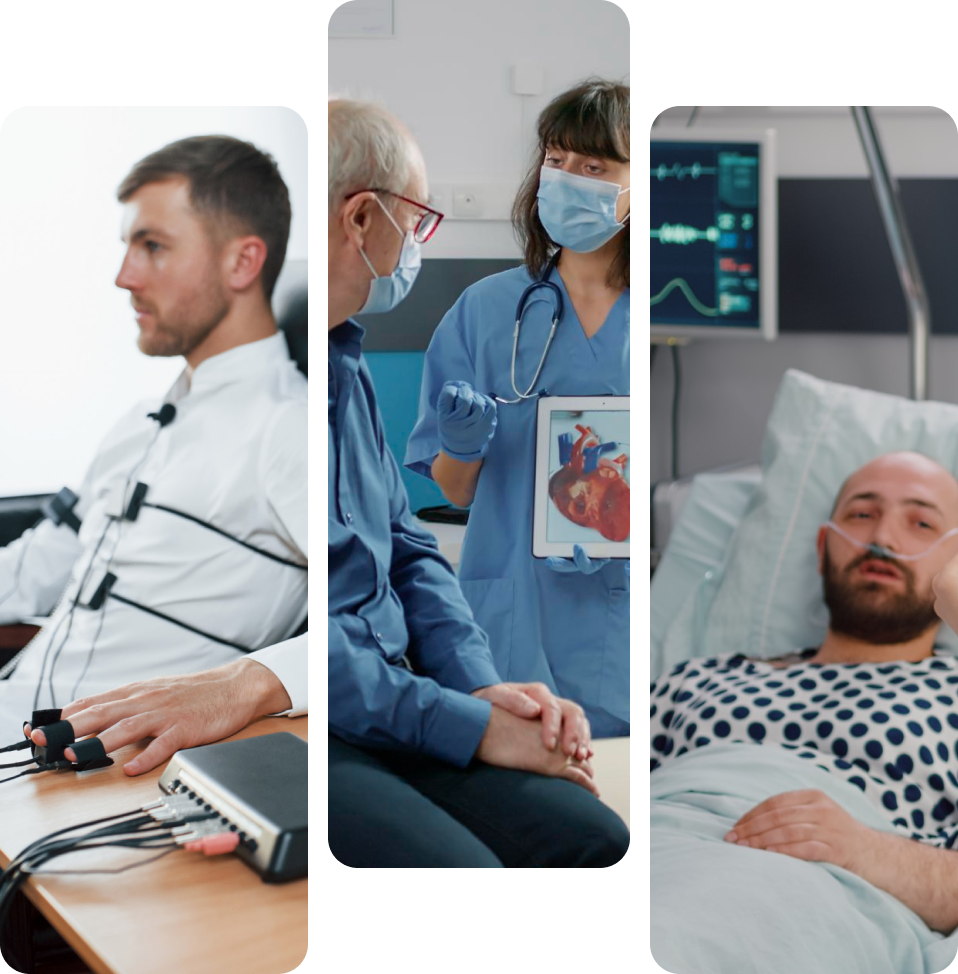
Similar to a standard pacemaker, a biventricular pacemaker can be implanted either by an endocardial (transvenous) approach or an epicardial approach. A biventricular pacemaker usually has three leads; one is guided to the right ventricle, one to the left ventricle and the third (which is not always present) is guided to the right atrium. The lead in the left ventricle is guided through the coronary sinus.
When the heart rate drops below the rate set with the pacemaker, it senses the drop and transmits electrical impulses to the left as well as the right ventricle to contract simultaneously, improving the ejection fraction and the cardiac function. The lead placed in the right atrium helps the heart to function in a more balanced way.
Biventricular pacemaker implantation is also called cardiac synchronization therapy and is only a part of any comprehensive heart failure management program. Medications, life style changes and regular follow up with a cardiac specialist are all crucial for managing the symptoms and improving the quality of life in heart failure patients.
When the heart rate drops below the rate set with the pacemaker, it senses the drop and transmits electrical impulses to the left as well as the right ventricle to contract simultaneously, improving the ejection fraction and the cardiac function. The lead placed in the right atrium helps the heart to function in a more balanced way.
Biventricular pacemaker implantation is also called cardiac synchronization therapy and is only a part of any comprehensive heart failure management program. Medications, life style changes and regular follow up with a cardiac specialist are all crucial for managing the symptoms and improving the quality of life in heart failure patients.
Procedure
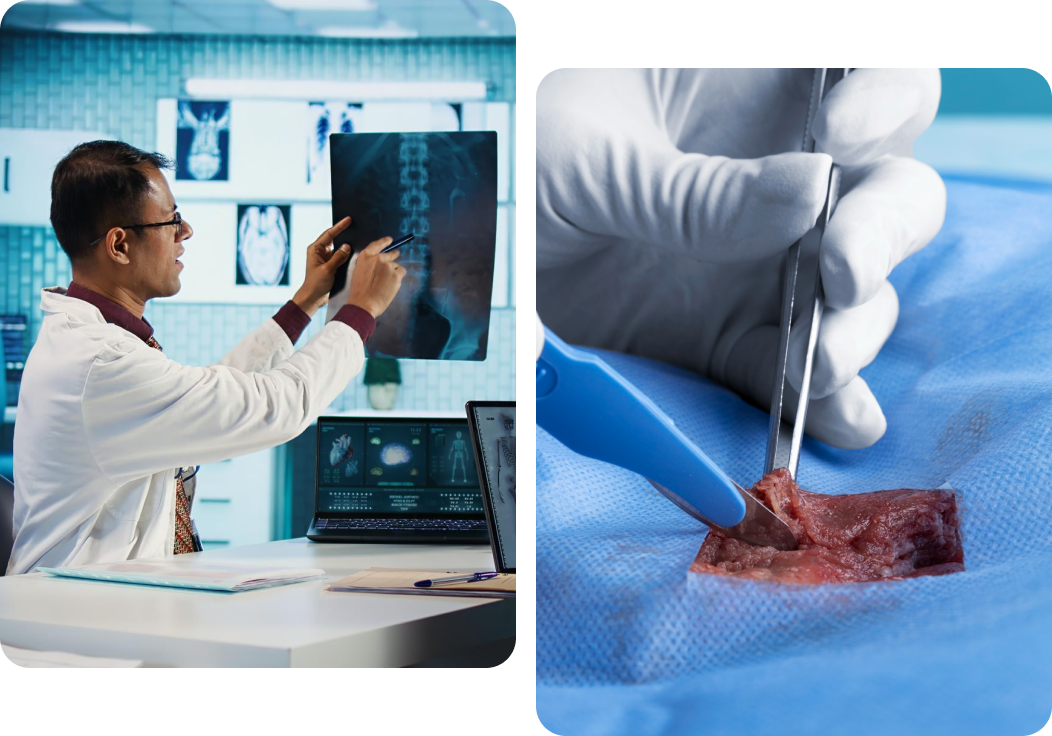
The device is usually implanted using the transvenous approach. In this approach, a small incision is made in the chest of the patient after numbing the area with local anesthetic. Sedation is also given. The lead is then inserted through this incision into a major vein to reach the specific chamber of the heart. This is done under guidance of real time X-ray images provided by fluoroscopy. Two of the leads are guided to the right atrium and right ventricle. The third lead is guided to the left ventricle through the coronary sinus. The ends of the leads are then attached to the heart muscle. After one end of the lead is attached to the heart muscle, the leads are checked for proper placement and functioning through a lead function test called pacing. Once the leads have cleared the test, the other end of the lead is then connected to the device which is usually placed in a pocket under the skin in the upper chest and the incision is closed.
The whole implantation procedure usually takes around 2 to 4 hours. The recovery is fast in transvenous approach and patient is discharged from the hospital in about 24 hours. In rare cases, when transvenous approach cannot be used, the device is implanted in the pocket underneath the skin in the lower abdomen (epicardial approach). Implantation using this approach is done under general anesthesia and takes a little longer, around 3 to 5 days, for recovery.
The whole implantation procedure usually takes around 2 to 4 hours. The recovery is fast in transvenous approach and patient is discharged from the hospital in about 24 hours. In rare cases, when transvenous approach cannot be used, the device is implanted in the pocket underneath the skin in the lower abdomen (epicardial approach). Implantation using this approach is done under general anesthesia and takes a little longer, around 3 to 5 days, for recovery.
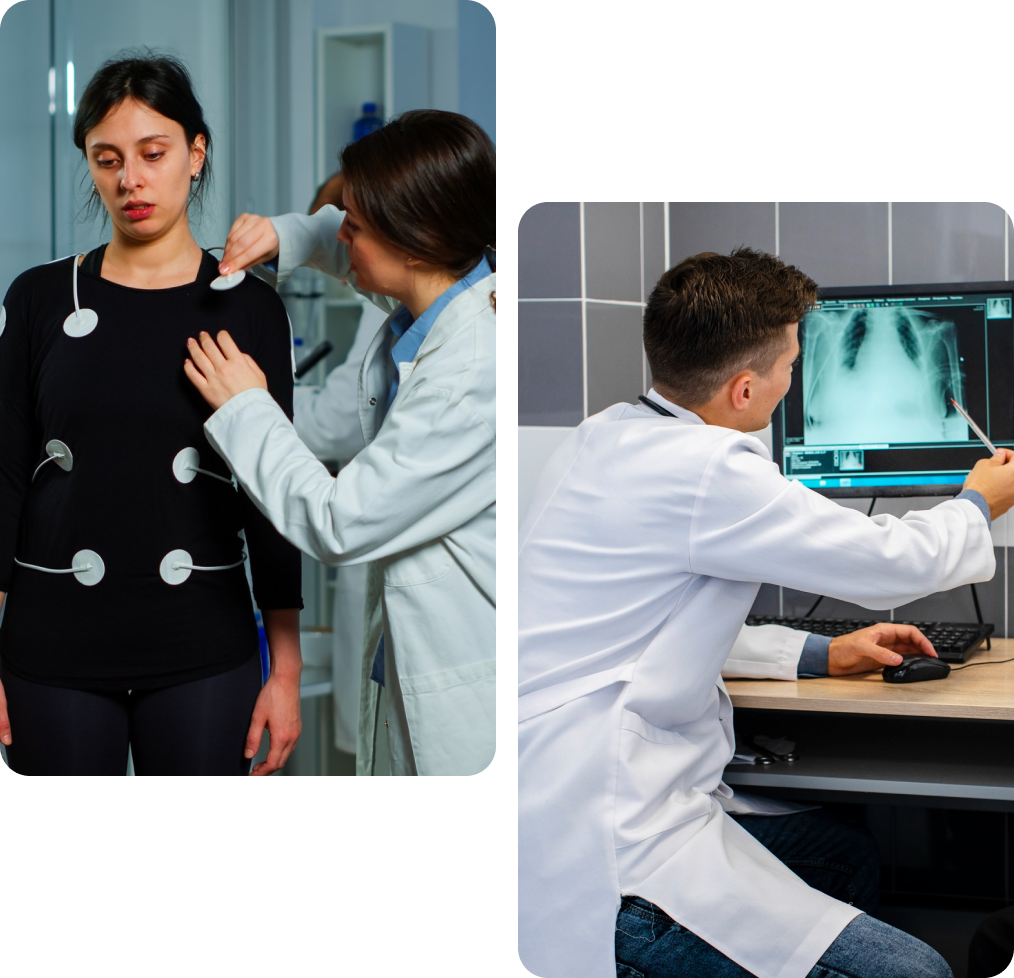
After the implantation procedure, a chest X-ray is done to check the lungs and the position of the device and the leads. A telemetry monitor and Holter monitor are also connected to the chest with sticky electrode patches to monitor and record the heart rhythm. These monitors are removed before discharge from the hospital and the patient is sent to the device clinic for final settings of the device. In the device clinic, a small device called a programmer is held directly over the device to adjust the settings and the data of both the device check and the Holter monitor are taken into consideration. An echocardiogram may also be performed.
After implantation of the device, the patient is scheduled for regular follow up visits. These follow up visits are important to monitor the function of the device and change the settings if required.
After implantation of the device, the patient is scheduled for regular follow up visits. These follow up visits are important to monitor the function of the device and change the settings if required.