- (731) 423-8200
- 1877-284-3135

- Cardiological Procedures
Coronary Artery Disease
A condition where the coronary arteries become narrowed or blocked, reducing blood flow to the heart muscle.
CAD
Introduction
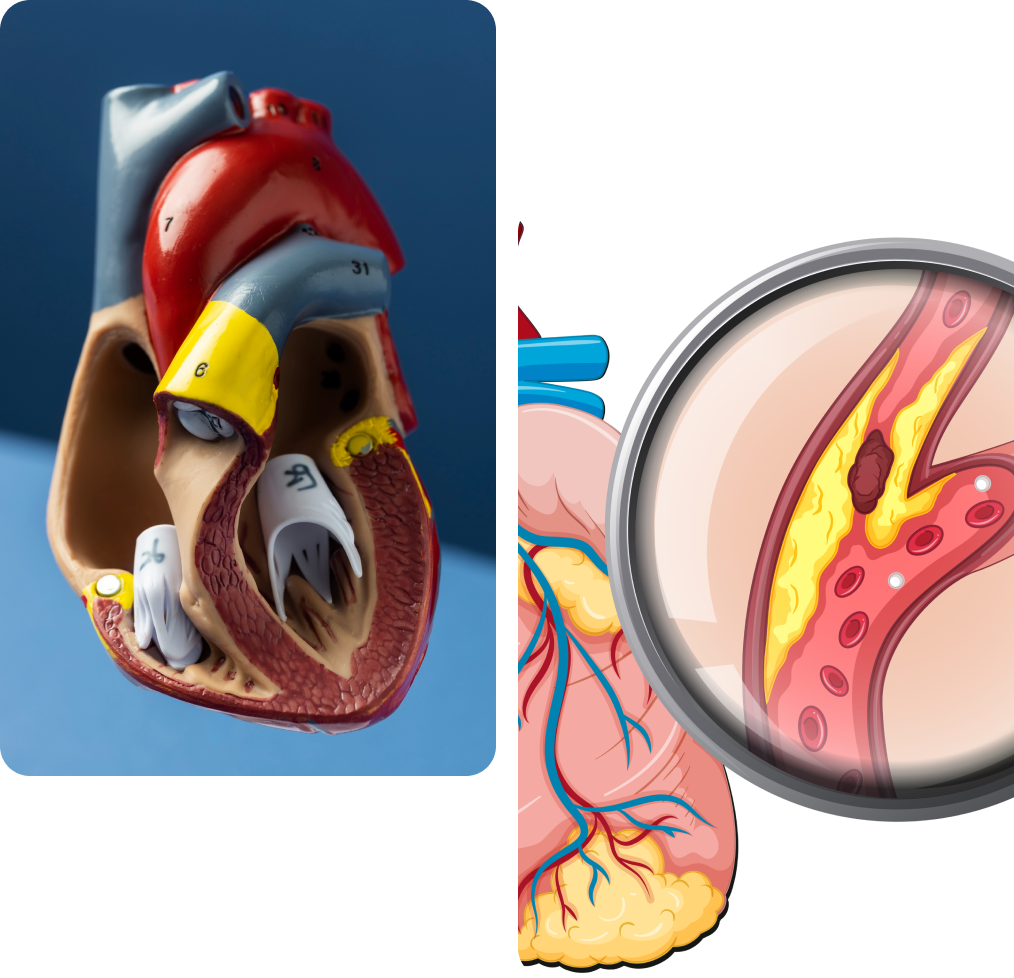
Coronary artery disease (CAD) usually occurs when cholesterol and plaque accumulate inside the coronary arteries (blood vessels supplying oxygen-rich blood to heart muscles), and block the flow of oxygen-rich blood to the heart muscles. The plaque can sometimes break off and form a blood clot that can completely block the vessels, leading to permanent heart damage.
CAD is the most common of all heart diseases, and a leading cause of death in the US. Despite this, it often goes unnoticed as the plaques develop over many years.
CAD is the most common of all heart diseases, and a leading cause of death in the US. Despite this, it often goes unnoticed as the plaques develop over many years.
Causes
CAD occurs due to atherosclerosis, a condition where cholesterol and a waxy substance called plaque accumulate in the coronary arteries over time, thereby narrowing the artery and reducing the flow of blood.

Symptoms
Symptoms may not manifest in the initial stages when there is a decrease in blood flow, but may show up as the plaque continues to build.
The most common symptom is angina, characterized by pain, discomfort, heaviness, tightness or numbness in the chest. It can also be felt in the neck, jaw, back, left shoulder or arms, and is often mistaken for heartburn or indigestion.
Other symptoms include heart attack, shortness of breath, weakness, giddiness or fainting, sweating, and nausea.
If you feel any of these symptoms, you should see your physician immediately.
Risk factors
The most common symptom is angina, characterized by pain, discomfort, heaviness, tightness or numbness in the chest. It can also be felt in the neck, jaw, back, left shoulder or arms, and is often mistaken for heartburn or indigestion.
Other symptoms include heart attack, shortness of breath, weakness, giddiness or fainting, sweating, and nausea.
If you feel any of these symptoms, you should see your physician immediately.
Risk factors
Some Of The Risk FactorsInclude:
- Advanced age
- Family history
- Smoking
- High blood pressure
- Diet rich in cholesterol and saturated fat
- Diabetes
- Physical inactivity
- Obesity
- Stress
- Sex, with men being at a higher risk
- Menopause
Complications
Over time, when the muscles are starved of oxygen and weaken, other conditions can occur such as heart failure (heart can’t pump sufficient blood for your entire body) and arrhythmias (irregular heartbeats).
Diagnosis
Your physician will examine and review your medical history, and order one or more of the following diagnostic tests:
Diagnosis
Your physician will examine and review your medical history, and order one or more of the following diagnostic tests:
- Electrocardiogram (ECG): to record the heart’s electrical activity
- Echocardiogram: to view the heart’s size, structure and motion using sound waves
- Stress test: to record the heart’s electrical activity while you run on a treadmill
- Angiogram: to view the flow of blood using a special dye and x-ray
- Computerized tomography (CT) scan: to view your arteries
- Magnetic resonance angiography (MRA): to view blood vessels using a magnetic field and radio waves


Treatment
Lifestyle changes
Adopting a healthy lifestyle that incorporates plenty of physical activity, nutritious food, limited alcohol and nicotine, and a good weight management regime will go a long way in preventing and controlling coronary artery disease.Medications
Medications are recommended if risk factors cannot be lowered through lifestyle changes.Surgery
Certain procedures can be used to open up the blocked arteries:- Balloon angioplasty: An inflated balloon is inserted into the blocked artery to compress the deposits against the arterial wall. Sometimes a stent is placed and left in the artery to keep it open.
- Coronary artery bypass surgery: A blood vessel from another part of the body is used to create a graft to bypass the blocked artery.