- (731) 423-8200
- 1877-284-3135


- Cardiological Procedures
Metabolic Stress Testing
A test that measures the heart and lungs’ performance during physical exercise to assess overall cardiovascular fitness.





Metabolic Stress Testing
Metabolic stress testing is a screening tool used to evaluate cardiopulmonary function.
A metabolic stress test is used to:
A metabolic stress test is used to:
- Assess the health of your heart and lungs
- Measure your heart’s ability to function
- Identify heart rhythm disturbances during exertion
- Help you develop an effective exercise program

Procedure
You are instructed not to eat, smoke, or drink caffeinated beverages or alcohol for 3 hours prior to the test. You can continue all your medications unless otherwise instructed by your physician. Certain medications that may interfere with the test are avoided. Make sure you wear comfortable clothing and shoes that facilitate exercise.
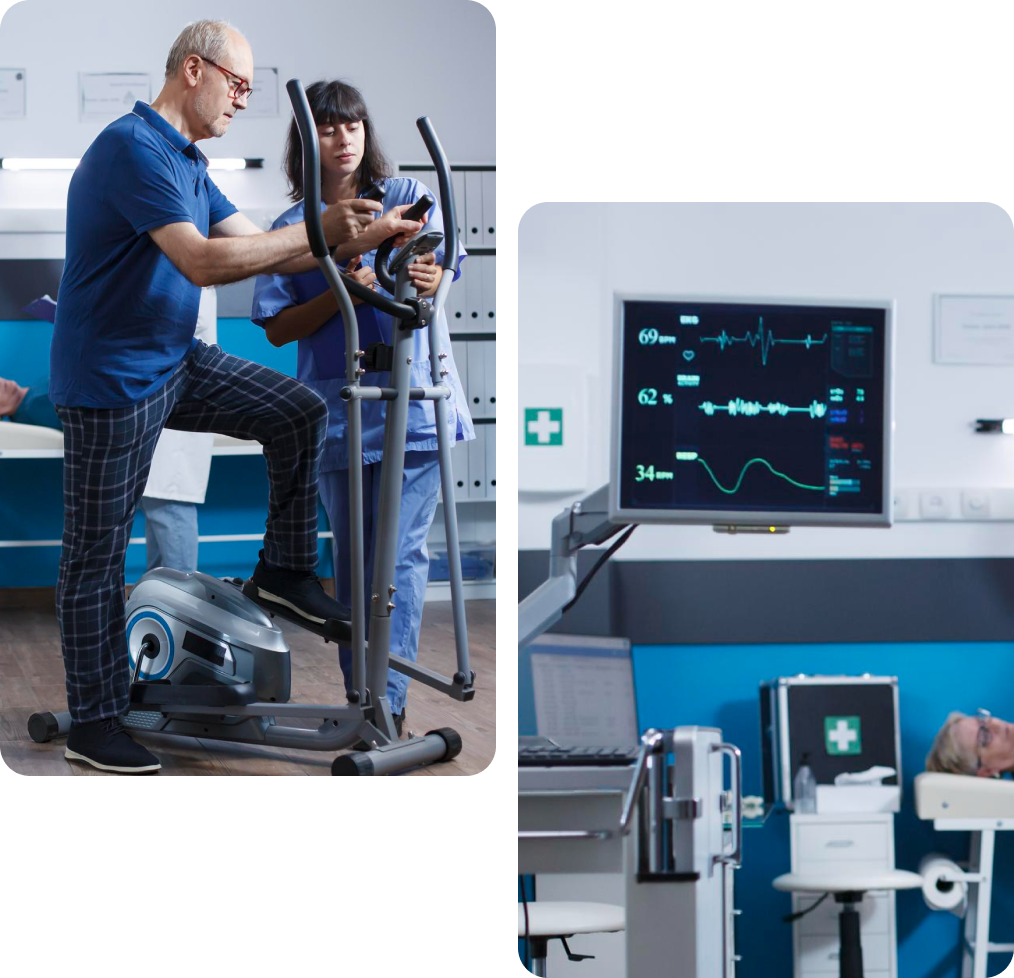
During the test, you’ll have electrodes placed on your chest to record the heart’s activity. These electrodes may cause a mild burning or stinging sensation. Your respiratory activities are monitored through a mask fitted around your nose and mouth. A pulse oximeter is placed on the finger and blood-pressure cuff around the upper arm. Before you start exercising, your heart rate, respiratory rate and blood pressure are measured. You will then begin riding a stationary bicycle or walking on a treadmill. The intensity of the exercise is increased gradually by increasing the speed of the treadmill or bicycle. The electrical activity of your heart is measured. Your oxygen consumption, carbon dioxide production, and rate of respiration will also be measured. Your oxygen saturation is measured through the oximeter and your BP readings are also recorded. You will be asked to continue exercising until you reach a target heart rate or signs of complications such as chest pain or an exaggerated rise in blood pressure. Your vital signs will continue to be monitored for 10 to 15 minutes after exercise, until the levels normalize.
During the test, you’ll have electrodes placed on your chest to record the heart’s activity. These electrodes may cause a mild burning or stinging sensation. Your respiratory activities are monitored through a mask fitted around your nose and mouth. A pulse oximeter is placed on the finger and blood-pressure cuff around the upper arm. Before you start exercising, your heart rate, respiratory rate and blood pressure are measured. You will then begin riding a stationary bicycle or walking on a treadmill. The intensity of the exercise is increased gradually by increasing the speed of the treadmill or bicycle. The electrical activity of your heart is measured. Your oxygen consumption, carbon dioxide production, and rate of respiration will also be measured. Your oxygen saturation is measured through the oximeter and your BP readings are also recorded. You will be asked to continue exercising until you reach a target heart rate or signs of complications such as chest pain or an exaggerated rise in blood pressure. Your vital signs will continue to be monitored for 10 to 15 minutes after exercise, until the levels normalize.
Metabolic stress testing is usually a safe procedure; however, some individuals may develop chest pain or dizziness. Rarely, a heart attack or irregular rhythm may also occur. Metabolic stress testing is less accurate in young or middle-aged women who do not have symptoms of heart disease. Abnormal results may be due to abnormal heart rhythms during exercise, lack of aerobic fitness, stress on the heart triggered by exercise, and a possible coronary artery disease (blockage in the arteries).
Additional Resources
Related Links
Explore trusted tools, guides, and links to support your Medicare and healthcare journey.